

CompTIA CompTIA Security+
- Exam: SY0-701 (CompTIA Security+)
- Certification: CompTIA Security+
- Certification Provider: CompTIA

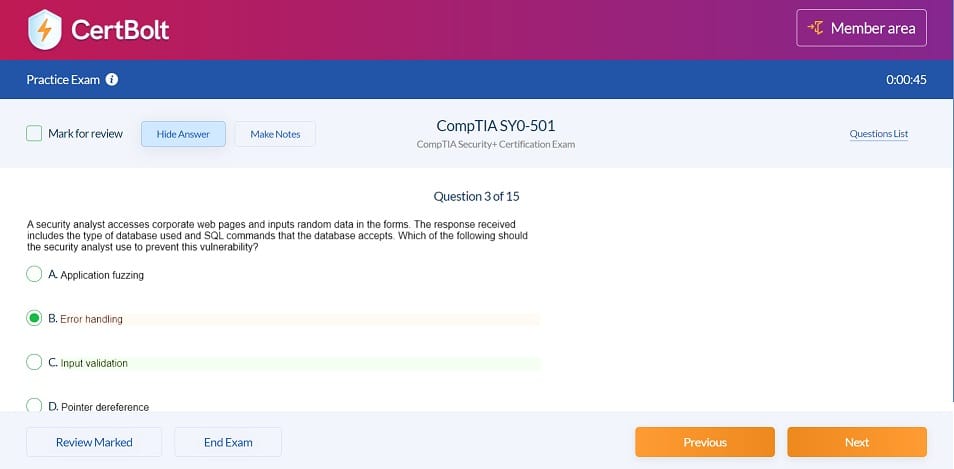
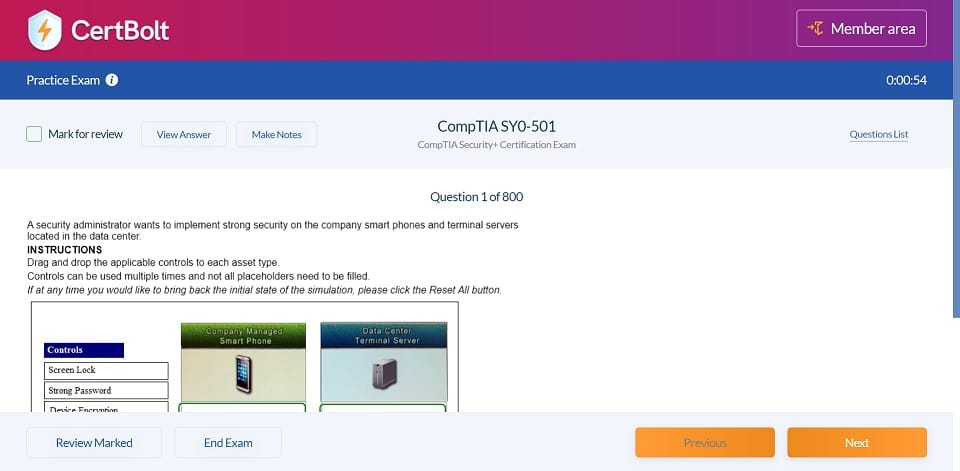
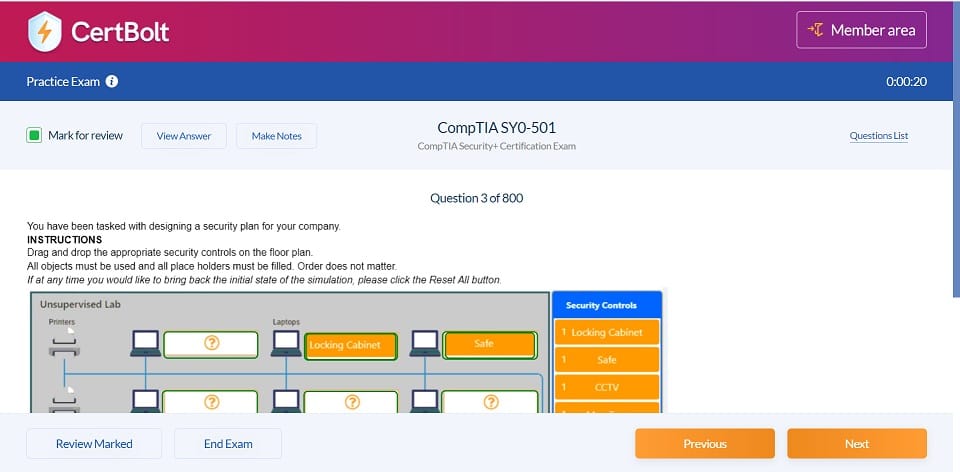
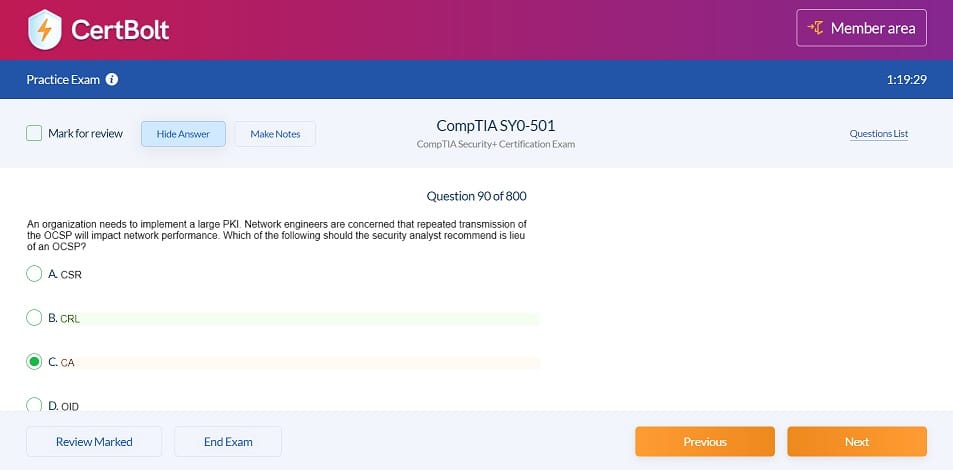
100% Updated CompTIA CompTIA Security+ Certification SY0-701 Exam Dumps
CompTIA CompTIA Security+ SY0-701 Practice Test Questions, CompTIA Security+ Exam Dumps, Verified Answers
-
-

SY0-701 Questions & Answers
757 Questions & Answers
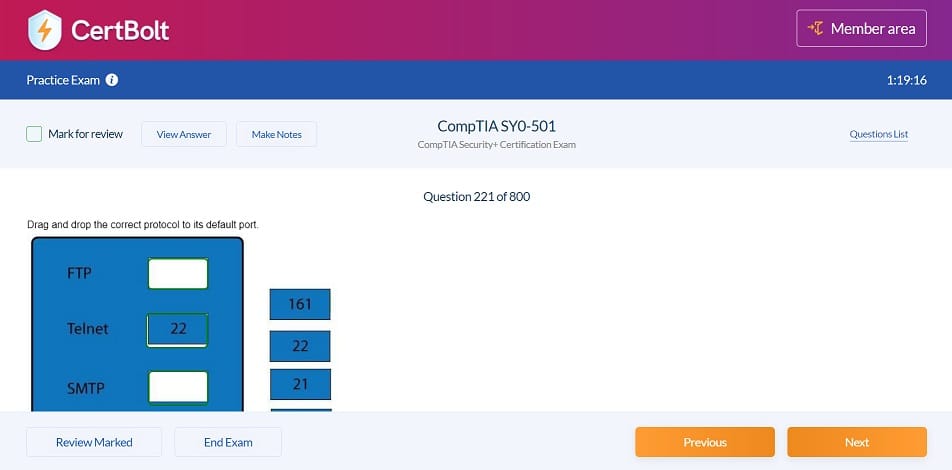
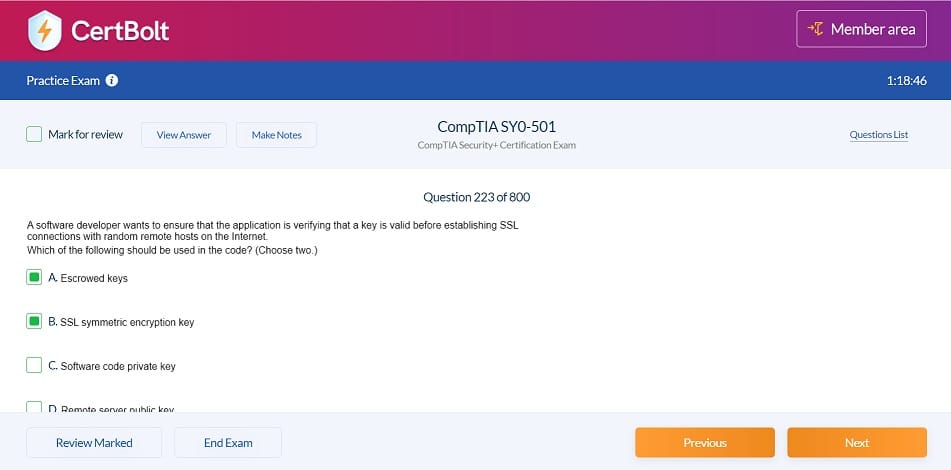
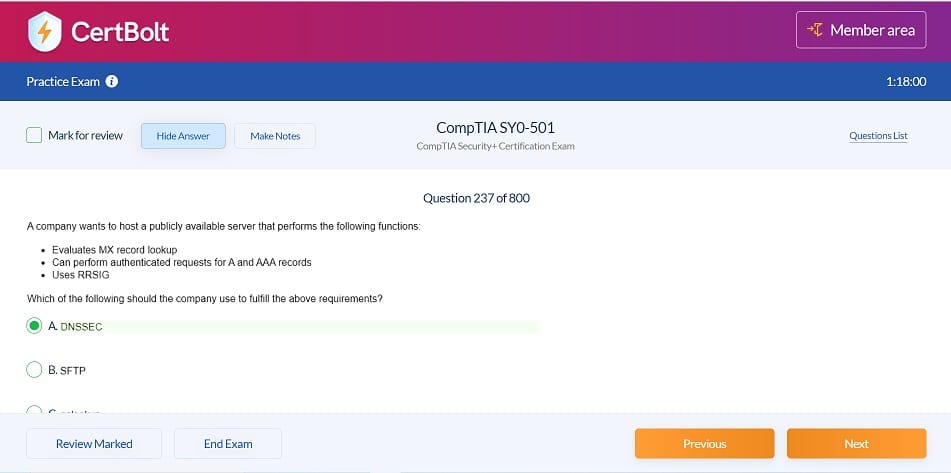
Includes 100% Updated SY0-701 exam questions types found on exam such as drag and drop, simulation, type in, and fill in the blank. Fast updates, accurate answers for CompTIA CompTIA Security+ SY0-701 exam. Exam Simulator Included!
-
SY0-701 Online Training Course
167 Video Lectures
Learn from Top Industry Professionals who provide detailed video lectures based on 100% Latest Scenarios which you will encounter in exam.
-
SY0-701 Study Guide
1003 PDF Pages
Study Guide developed by industry experts who have written exams in the past. Covers in-depth knowledge which includes Entire Exam Blueprint.
-
-
CompTIA CompTIA Security+ Certification Practice Test Questions, CompTIA CompTIA Security+ Certification Exam Dumps
Latest CompTIA CompTIA Security+ Certification Practice Test Questions & Exam Dumps for Studying. Cram Your Way to Pass with 100% Accurate CompTIA CompTIA Security+ Certification Exam Dumps Questions & Answers. Verified By IT Experts for Providing the 100% Accurate CompTIA CompTIA Security+ Exam Dumps & CompTIA CompTIA Security+ Certification Practice Test Questions.
An Introduction to CompTIA Security+
The CompTIA Security+ certification is a globally recognized credential that validates foundational cybersecurity skills. Candidates must demonstrate proficiency in network security, threats and vulnerabilities, compliance, and operational security. Preparing thoroughly for the exam ensures professionals can protect organizations from evolving cyber threats effectively. One of the best ways to approach preparation is by using practice tests and simulated scenarios to familiarize yourself with real-world problems. These practice questions help candidates identify weak areas, allowing focused study that improves retention and confidence before taking the official exam.
Additionally, understanding each domain of the exam is crucial. Familiarity with objectives such as risk management, identity and access control, and cryptography ensures that you can approach questions analytically rather than memorizing answers. Candidates often overlook the importance of understanding practical implementations of security protocols. Exploring industry-focused guides, like the Google Cloud digital leader overview can provide useful insights on approaching certification preparation strategically, even outside your immediate domain. A structured study plan combining theory, practice questions, and review sessions significantly increases the chances of passing the Security+ exam on the first attempt.
Benefits of Security+ Certification
Earning a CompTIA Security+ certification brings numerous professional advantages, particularly for those looking to strengthen their cybersecurity career. The certification demonstrates a candidate’s ability to manage and mitigate security risks, giving employers confidence in their skills. For IT professionals, it opens doors to roles such as security analyst, systems administrator, and network engineer. The benefits extend beyond career growth; certified individuals often experience higher salaries and improved job security due to their validated skill set. Preparing with authentic exam-oriented questions helps streamline the learning process while reinforcing essential cybersecurity concepts.
The certification also emphasizes practical, hands-on skills rather than theoretical knowledge alone. Understanding how to implement firewalls, configure security settings, and detect vulnerabilities in real-world scenarios is key to success. Candidates aiming to enhance their cloud security expertise may find resources like career boosting CCSP guide highly beneficial. This guide explains the relevance of cloud security frameworks and best practices that can complement your Security+ preparation. Security+ certification is more than an exam—it’s a career investment that validates your capability to manage cybersecurity challenges effectively.
Core Domains Covered in Security+
The Security+ exam covers several crucial domains, each designed to ensure a comprehensive understanding of cybersecurity principles. Topics include threats and vulnerabilities, identity and access management, cryptography, network architecture, and operational security. Candidates need to grasp both theoretical concepts and practical applications to tackle scenario-based questions effectively. Using practice test questions tailored to each domain can help learners identify knowledge gaps and build confidence in applying their skills. Exam readiness is not just about memorization but also about understanding context and implementation in realistic situations.
For instance, understanding cloud-related threats is becoming increasingly important. Security professionals should be aware of frameworks and strategies used in cloud environments. Guides like professional ML engineer cert provide insights into practical cloud security applications and real-world scenarios. While not Security+ specific, learning about secure configurations and risk management in cloud platforms strengthens overall cybersecurity competency. Focused study on each domain, reinforced by targeted practice questions, ensures that candidates approach the Security+ exam with a robust understanding of essential cybersecurity concepts.
Effective Study Strategies
Success in the Security+ exam relies heavily on adopting structured and efficient study strategies. Candidates should start with a review of the exam objectives, followed by a mix of practice tests, study guides, and hands-on exercises. Breaking down the material into manageable sections and setting achievable goals helps maintain motivation while ensuring comprehensive coverage. Simulated questions are particularly helpful because they mirror the scenario-based nature of the exam, giving learners the opportunity to apply concepts rather than simply memorize facts.
Moreover, integrating real-world examples into study routines reinforces learning. For instance, working through practical exercises in cloud or network security can enhance conceptual understanding. References like Google cloud certification guide provide structured guidance for applying security principles in cloud environments, offering tips that indirectly benefit Security+ preparation.
Consistency is key. Regular review sessions, combined with periodic self-assessment using targeted practice questions, ensures retention and builds confidence, which are critical for successfully passing the Security+ exam.
Common Exam Challenges
Candidates often encounter challenges when preparing for the Security+ exam. These include understanding complex concepts like cryptography, identifying subtle differences in network vulnerabilities, and applying security principles to scenario-based questions. Using practice exams can help candidates recognize these difficult areas and refine their test-taking strategies. Awareness of common pitfalls enables focused preparation, reducing the risk of unexpected surprises on exam day.
Another challenge lies in managing the breadth of the exam content. The domains span multiple aspects of cybersecurity, and memorization alone is insufficient. Instead, combining theory with real-world applications can enhance understanding. For example, exploring references like real world scenario guide allows candidates to see how security concepts are applied in practice, improving both retention and analytical skills. By recognizing these challenges and using structured practice and study materials, candidates can approach the Security+ exam with confidence and improve their likelihood of success.
Understanding Risk Management Concepts
Risk management is a critical part of the Security+ exam. Candidates must understand how to identify, assess, and mitigate potential security threats within an organization. This includes implementing policies, procedures, and controls to reduce risks to an acceptable level. Effective preparation involves studying both theoretical frameworks and practical examples to recognize how risk manifests in different environments. Using practice questions focused on risk scenarios can help candidates develop problem-solving skills and improve exam performance.
Candidates also need to grasp the distinction between qualitative and quantitative risk analysis. Being able to apply these concepts ensures informed decisions when prioritizing security measures. Exploring references like fundamentals of blockchain technology offers insight into how emerging technologies influence risk management strategies. Understanding these principles prepares candidates not only for exam questions but also for real-world cybersecurity challenges.
Integrating risk management exercises into your study routine allows for greater retention and builds the analytical skills required to handle complex security problems. A combination of theory, applied practice, and scenario-based questions is essential for success.
Network Security Essentials
Network security is a key domain tested in the Security+ exam. Candidates must understand firewalls, intrusion detection systems, secure network design, and endpoint security measures. Proper preparation involves studying real-world network configurations and completing targeted practice questions to identify vulnerabilities and appropriate mitigation techniques. Understanding common attacks such as denial-of-service, phishing, and man-in-the-middle helps candidates apply concepts in both exams and practical scenarios.
Security professionals also need to know how to monitor traffic, manage access controls, and implement encryption protocols. Supplementing this knowledge with guides like HDFS installation and shell commands provides hands-on examples of managing large-scale systems securely. While focused on data frameworks, this resource indirectly strengthens network security comprehension.
Regular practice with network security scenarios builds confidence and familiarity, enabling candidates to approach Security+ questions with a clear understanding of both theoretical and applied concepts.
Identity and Access Management
Identity and access management (IAM) ensures that only authorized users have access to specific systems and data. Security+ candidates must understand authentication methods, authorization protocols, and account management policies. Practicing scenario-based questions helps candidates evaluate access control challenges and choose the correct solutions, which is crucial for the exam. IAM-focused practice exams highlight common misconfigurations and reinforce key concepts for retention.
Modern IAM includes multi-factor authentication, single sign-on, and role-based access controls. Resources like consortium blockchain enterprise guide illustrate how collaborative environments manage secure identities in complex networks. This exposure enhances comprehension of both traditional and emerging security techniques.
Focusing on identity and access practices in study routines ensures candidates can effectively implement security policies, understand potential risks, and confidently answer related Security+ questions.
Cryptography and Encryption
Cryptography is a foundational element of cybersecurity. Security+ candidates must understand symmetric and asymmetric encryption, hashing, digital signatures, and secure communication protocols. Practicing questions on cryptographic implementation helps reinforce how and when to apply encryption in real-world scenarios. Using practice scenarios on encryption techniques strengthens analytical thinking and builds confidence for scenario-based exam questions.
Beyond theory, candidates benefit from exploring guides such as neural network foundations Keras, which explains secure data handling in AI systems. While focused on machine learning, understanding secure data flow and encryption principles is relevant to Security+ preparation.
A solid grasp of cryptography ensures candidates can protect data effectively, recognize potential vulnerabilities, and make informed security decisions both during the exam and in practical cybersecurity roles.
Monitoring and Incident Response
Effective monitoring and incident response are essential skills for Security+ certification. Candidates must understand how to detect, analyze, and respond to security incidents in a timely manner. Using incident response practice tests allows candidates to simulate real-world scenarios, analyze logs, and apply proper mitigation techniques. This approach builds confidence and improves problem-solving ability for exam scenarios.
Security professionals also need to understand regulatory compliance, forensic investigation procedures, and post-incident reporting. The tableau server performance tuning offer insights into monitoring complex systems, optimizing performance, and securing data effectively. While focused on analytics platforms, the principles can be adapted to cybersecurity monitoring strategies.
Consistent practice in incident response helps candidates apply theoretical knowledge, strengthens decision-making skills, and ensures readiness for the Security+ exam and real-world security challenges.
Choosing the Right Framework
Selecting the appropriate IT framework is essential for organizations aiming to improve service management and operational efficiency. Security+ professionals benefit from understanding frameworks like DevOps and ITIL because these methodologies influence cybersecurity practices and workflow management. A strategic comparison of these frameworks helps in determining the best approach for a team’s objectives. Using framework selection guidance allows candidates to understand how methodologies affect system security, incident response, and continuous improvement.
For instance, DevOps emphasizes automation, continuous integration, and collaboration, whereas ITIL focuses on structured processes, service management, and risk reduction. Security+ candidates who understand these distinctions can apply risk assessment and mitigation principles more effectively. The DevOps vs ITIL strategic guide provide insights into choosing frameworks that complement security strategies.
Integrating knowledge of frameworks into study routines allows candidates to not only prepare for the Security+ exam but also gain practical skills for real-world IT environments, enhancing adaptability and problem-solving abilities.
ITIL Interview Preparation
Preparing for ITIL-related discussions can improve a Security+ candidate’s understanding of service management and operational security. Interview questions often focus on processes, change management, and continual improvement. Using interview preparation questions helps candidates reinforce ITIL concepts while strengthening analytical and scenario-solving skills.
Understanding ITIL principles ensures better comprehension of how security policies integrate with organizational procedures. Guides like ITIL interview questions provide a collection of commonly asked questions that clarify key topics such as incident management, service request fulfillment, and process optimization. These insights are valuable for Security+ preparation because many security processes align with IT service management frameworks.
Regular practice with scenario-based ITIL questions allows candidates to link theory with practical application, enhancing confidence and readiness for both the exam and professional discussions.
Transitioning to ITIL 4
As organizations move from ITIL v3 to ITIL 4, understanding the differences is crucial for implementing modern security practices. Security+ candidates can benefit from exploring how frameworks evolve to meet operational needs, emphasizing continual improvement and risk management. Using ITIL transition guidance helps learners identify which processes and practices are updated, removed, or replaced.
For example, ITIL 4 introduces guiding principles and a holistic approach to service management, integrating security into operational procedures. The managing ITIL transition provide practical advice on navigating these changes effectively. Security+ candidates gain perspective on integrating security policies with evolving IT service management structures, enhancing both technical and procedural knowledge. By understanding these transitions, candidates are better prepared to apply security measures in dynamic IT environments, which is essential for both the exam and professional practice.
Continual Service Improvement
Continual improvement is a core component of ITIL and aligns closely with Security+ objectives. Candidates need to understand how to evaluate processes, measure effectiveness, and implement incremental changes that enhance security and operational efficiency. Using continual improvement questions allows learners to apply metrics and feedback loops in simulated scenarios, preparing them for real-world situations.
ITIL emphasizes structured evaluation and improvement cycles, which support Security+ objectives in operational security and risk management. Resources like ITIL intermediate continual improvement provide actionable insights on evaluating processes, prioritizing improvements, and maintaining compliance standards. These lessons enhance a candidate’s ability to understand audit trails, security monitoring, and system enhancements. Integrating continual improvement practices into study plans ensures candidates are prepared to address both exam questions and practical challenges in IT and cybersecurity environments.
Change Management Best Practices
Effective change management ensures organizational changes do not compromise security, compliance, or service reliability. Security+ candidates must understand the principles of planning, testing, and approving changes to minimize operational risk. Using change management roadmaps helps learners visualize the steps necessary for successful implementation and evaluate security implications in different scenarios.
Frameworks like ITIL provide structured methods for handling change, including impact analysis, risk assessment, and rollback procedures. Guides such as the ITIL change management roadmap explain the process of implementing changes efficiently while maintaining security standards. Candidates can apply these insights to scenario-based Security+ questions, reinforcing the connection between operational management and cybersecurity practices.
Focusing on change management prepares candidates for both exam success and practical application in dynamic IT environments, ensuring security and compliance are maintained during transitions.
Visual Communication Design
A strong understanding of visual communication is increasingly important in IT and cybersecurity environments, especially for presenting data and security reports effectively. Security+ candidates benefit from learning how to design intuitive dashboards, charts, and workflows that convey complex security information clearly.
Using visual communication techniques in practice scenarios allows learners to enhance clarity and reduce errors in reporting. The path to visual communication provide guidance on creating designs that communicate complex technical data to stakeholders efficiently. Security+ candidates can adapt these strategies to present findings, incident reports, and risk analyses in a way that is understandable and actionable.
Integrating visual communication practices into study routines strengthens analytical thinking and ensures candidates are prepared to convey technical concepts effectively, which is valuable for both the exam and professional work.
Functional Programming Concepts
Understanding functional programming principles can improve problem-solving and analytical skills relevant to Security+ topics, particularly in scripting and automation. Candidates must learn how functional paradigms affect code execution, data handling, and security in operational environments.
Using functional programming exercises enhances comprehension of logic flow and secure coding practices. The functional paradigm Scala guide introduce key concepts such as immutability, pure functions, and higher-order functions. Security+ candidates benefit from seeing how these approaches reduce errors and vulnerabilities in software, which parallels security best practices in IT operations.
Applying functional programming principles in practical exercises ensures candidates develop analytical and systematic thinking skills, which support scenario-based problem solving for the exam and real-world cybersecurity challenges.
Boolean Logic Analysis
A deep understanding of Boolean logic is essential for problem-solving, data analysis, and scripting in cybersecurity. Security+ candidates must learn how to evaluate logical expressions, understand conditional statements, and apply reasoning to identify correct outcomes.
Using Boolean logic practice exercises strengthens decision-making and analytical reasoning. The quantifying Boolean values provide methods for assessing truth values and logical operations systematically. While focused on R programming, these techniques reinforce structured thinking applicable to evaluating security rules, firewall conditions, and conditional access controls.
Regular practice with Boolean logic ensures candidates are proficient in analyzing scenarios, improving problem-solving skills, and handling complex Security+ exam questions efficiently.
Script Identification in Python
Python scripting is widely used for automating security tasks, data analysis, and vulnerability assessments. Security+ candidates must understand how to identify scripts, their purpose, and potential security implications.
Using Python script analysis exercises helps learners recognize script functionality, syntax issues, and potential vulnerabilities. Guides like script identification Python provide detailed instruction on identifying scripts and understanding their impact on systems. Candidates gain skills in evaluating code safely and securely, which complements their understanding of automation and security testing.
Incorporating Python script identification into study routines enhances practical knowledge and prepares candidates for scenario-based Security+ questions involving automation, security monitoring, and incident response.
Front-End Development Insights
Front-end development knowledge supports Security+ candidates in understanding user interface security, input validation, and secure design practices. Awareness of front-end vulnerabilities, such as cross-site scripting or insecure form handling, strengthens a candidate’s holistic security perspective.
Using front-end development exercises allows learners to apply security principles in practical contexts. The front-end development journey provide guidance on secure design practices, coding standards, and usability considerations. Candidates can integrate these concepts into security planning, audit tasks, and scenario-based question solving.
By including front-end security practices in preparation, candidates enhance their ability to identify and mitigate vulnerabilities, ensuring a well-rounded approach to both the exam and professional cybersecurity responsibilities.
Pega Systems Certification Overview
Pega Systems certification validates skills in designing and implementing Pega applications efficiently. Security+ candidates can benefit from understanding workflow automation, application security, and process optimization concepts highlighted in such certifications. Using Pega exam guidance allows candidates to explore practical problem-solving scenarios and learn best practices for managing application security effectively.
Understanding Pega’s platform also helps candidates grasp broader concepts of workflow security and process controls. Resources like Pega Systems certification provide structured study guidance and practice questions to reinforce knowledge. Security+ candidates can adapt these principles to analyze and mitigate operational risks in IT environments.
Integrating platform-specific certifications into study routines helps candidates develop analytical thinking, problem-solving skills, and practical application strategies, preparing them for both exam success and real-world cybersecurity tasks.
PeopleCert Certification Insights
PeopleCert certifications are widely recognized for IT service management and process-oriented skills. Security+ candidates benefit from understanding structured approaches to project management, process monitoring, and secure operational procedures. Using PeopleCert exam resources can help learners simulate real-world scenarios and apply process-oriented security strategies.
These certifications emphasize practical applications of IT management principles, incident response protocols, and risk management frameworks. Resources such as PeopleCert certification guide offer practice questions and insights that improve comprehension of security processes aligned with IT service management.
By exploring PeopleCert materials, candidates can strengthen procedural knowledge, decision-making skills, and their ability to integrate security best practices into operational workflows, which is invaluable for both the Security+ exam and professional cybersecurity environments.
PMI Certification Preparation
PMI certifications validate project management expertise, which is increasingly relevant for Security+ candidates involved in cybersecurity projects. Understanding how to plan, execute, and monitor security-related initiatives requires structured project management skills.
Using PMI exam practice helps candidates simulate project scenarios and reinforce risk assessment and mitigation techniques. The PMI certification overview provide detailed practice questions, exam strategies, and project management insights that can be adapted to cybersecurity contexts. Candidates learn to manage resources, timelines, and risk factors while maintaining compliance and security standards.
Integrating project management principles into preparation routines helps Security+ candidates approach scenario-based questions strategically, ensuring they can handle complex organizational tasks efficiently and securely.
PRINCE2 Certification Insights
PRINCE2 is a process-based project management methodology that emphasizes clear roles, structured stages, and risk management. Security+ candidates benefit from understanding how these principles influence security project execution, compliance, and operational governance.
Using PRINCE2 exam guidance allows learners to practice scenario-based decision-making and enhance analytical skills. The PRINCE2 certification overview provide structured guidance on planning, monitoring, and controlling projects while integrating security considerations. Candidates can apply these principles to real-world IT and cybersecurity projects, ensuring consistent, secure outcomes.
Including PRINCE2 concepts in study routines reinforces strategic planning, resource allocation, and risk management abilities, which are essential for successfully handling Security+ exam scenarios and professional responsibilities.
Pulse Secure Certification Essentials
Pulse Secure certification validates expertise in secure remote access, VPNs, and endpoint security solutions. Security+ candidates can benefit from exploring access control mechanisms, network security configurations, and authentication strategies.
Using Pulse Secure exam resources allows candidates to practice securing network environments and managing connectivity risks in simulated scenarios. Guides like Pulse Secure certification guide provide hands-on exercises and scenario-based practice questions that strengthen knowledge of authentication protocols, secure configurations, and threat mitigation. Candidates gain practical skills that directly enhance understanding of network and operational security principles.
Incorporating Pulse Secure principles into study plans improves readiness for Security+ scenario questions and builds practical capabilities for managing secure remote access in professional IT environments.
Pure Storage Certification Overview
Pure Storage certification validates skills in managing all-flash storage solutions and optimizing storage performance. Security+ candidates can benefit from understanding data storage security, backup strategies, and system optimization techniques.
Using Pure Storage exam guide helps learners practice configuring storage systems securely and managing data access effectively. Resources like Pure Storage certification guide provide structured practice questions, scenario-based exercises, and configuration insights that strengthen understanding of storage security principles. Candidates can apply these skills to ensure data confidentiality, integrity, and availability in IT environments.
Integrating Pure Storage concepts into preparation routines enhances analytical thinking, problem-solving skills, and practical knowledge of secure storage management, which is valuable for both Security+ exam success and professional IT responsibilities.
Python Institute Certification
Python scripting is widely used in cybersecurity for automation, analysis, and vulnerability assessment. Python Institute certification validates programming skills, which Security+ candidates can leverage for automating security tasks.
Using Python Institute exam allows learners to practice scripting, implement secure code, and solve scenario-based problems efficiently. Resources like Python Institute certification guide provide exercises on syntax, logic, and security best practices in Python. Candidates can develop secure scripts for monitoring, logging, and analyzing system events, which complements Security+ practical skills.
Studying Python certification materials strengthens coding proficiency, analytical reasoning, and problem-solving skills, helping candidates tackle scenario-based Security+ questions and perform real-world cybersecurity tasks effectively.
DCS-SA PowerProtect Exam
DCS-SA PowerProtect certification focuses on enterprise backup, recovery, and data protection solutions. Security+ candidates can benefit from understanding secure data storage, disaster recovery planning, and risk mitigation strategies.
Using PowerProtect exam resources allows learners to simulate backup scenarios, identify vulnerabilities, and implement secure recovery methods. Guides like DCS-SA PowerProtect guide provide scenario-based practice questions and configuration insights for enterprise data protection. Candidates gain practical knowledge in ensuring data availability, integrity, and compliance with security policies.
Integrating PowerProtect principles into study routines enhances preparedness for Security+ exam questions related to data protection, operational security, and risk management, while building applicable real-world skills.
DCS-TA Midrange Storage Solutions
DCS-TA Midrange Storage certification validates skills in managing midrange storage systems, optimizing performance, and securing data access. Security+ candidates benefit from understanding how storage security and configuration impact overall system reliability and risk mitigation.
Using Midrange Storage exam allows learners to practice real-world scenario solutions and implement secure storage strategies. The DCS-TA Midrange Storage guide offer practical exercises, scenario-based questions, and configuration guidance. Candidates learn to manage storage efficiently while maintaining data integrity and security standards.
Integrating these storage practices into study routines strengthens analytical skills, problem-solving abilities, and the application of secure storage principles, preparing candidates for both the Security+ exam and professional IT challenges.
DCS-TA PowerMax All-Flash Solutions
DCS-TA PowerMax certification focuses on advanced all-flash storage solutions, high-performance data management, and secure system configuration. Security+ candidates can benefit from understanding performance optimization, access control, and disaster recovery strategies.
Using PowerMax exam practice helps learners simulate secure storage scenarios and apply best practices for risk mitigation. Guides like DCS-TA PowerMax guide provide hands-on exercises, scenario-based questions, and insights for managing enterprise storage securely. Candidates gain practical knowledge of data integrity, encryption, and secure system monitoring.
Including PowerMax all-flash storage concepts in study routines enhances readiness for Security+ scenario-based questions and builds real-world skills for managing high-performance storage systems in secure IT environments.
Dell Storage Fundamentals
Understanding storage fundamentals is critical for IT and cybersecurity professionals. Security plus candidates benefit from learning the principles of data storage, management, and system security in enterprise environments.
Using storage fundamentals guide allows learners to explore structured storage concepts, backup strategies, and risk management practices. The Dell Information Storage Foundations provide scenario-based questions, exercises, and practical insights to enhance understanding of data confidentiality, integrity, and availability. Candidates can apply these concepts to protect critical data and maintain system reliability in real-world IT setups.
Integrating storage fundamentals into study routines strengthens analytical thinking, practical problem-solving, and knowledge of secure data management, preparing candidates for both the Security plus exam and professional responsibilities.
PowerStore Deployment Techniques
Deploying enterprise storage solutions requires technical expertise and a focus on security. Security plus candidates benefit from learning how to configure, monitor, and maintain storage systems securely.
Using PowerStore deployment techniques helps learners practice system setup and access control measures effectively. Guides such as Dell PowerStore Deploy provide exercises, configuration strategies, and scenario-based questions to develop hands-on experience in managing storage infrastructure. Candidates gain skills in ensuring secure operations and reliable system performance.
Studying deployment techniques enhances preparation for Security plus scenario-based questions and builds practical knowledge for securing enterprise storage environments in professional IT contexts.
Sonic Deployment Procedures
Integrating network and storage systems is a key aspect of enterprise security. Security plus candidates need to understand how to deploy and configure systems while maintaining security and reliability.
Using Sonic deployment procedures allows learners to practice setup, troubleshooting, and secure access management. The Dell Sonic Deploy provide step-by-step instructions, scenario exercises, and practical tips for securing deployments. Candidates develop knowledge of protecting data flow, configuring secure connections, and ensuring system integrity.
Practicing Sonic deployment procedures improves readiness for Security plus scenario questions and equips candidates with real-world skills for managing secure enterprise network environments.
Unity Deployment Practices
Enterprise storage platforms require careful configuration to ensure performance, availability, and security. Security plus candidates benefit from learning deployment processes, system monitoring, and access control methods.
Using Unity deployment practices helps learners apply secure setup and configuration management strategies. Guides such as Dell Unity Deploy offer scenario-based exercises, step-by-step deployment instructions, and insights for maintaining secure storage systems. Candidates gain expertise in implementing secure configurations while preserving operational efficiency.
Studying Unity deployment practices enhances problem-solving, analytical thinking, and Security plus readiness for tasks involving secure enterprise storage environments.
Software Testing Certification
Software testing ensures systems operate securely and reliably. Security plus candidates benefit from understanding testing methodologies, defect detection, and process verification.
Using software testing certification allows learners to practice QA techniques and incorporate security measures into testing processes. Resources like ASTQB certification exam provide scenario-based exercises, practice questions, and guidance on applying testing principles. Candidates learn to detect vulnerabilities, validate system integrity, and ensure secure application functionality.
Integrating software testing concepts into study routines strengthens analytical reasoning, scenario problem-solving, and preparation for Security plus exam questions involving system security and operational assessment.
FCBA Certification Insights
Business analysis plays a key role in ensuring IT systems meet organizational goals while maintaining security. Security plus candidates benefit from learning structured techniques to evaluate business processes, identify risks, and implement effective solutions. Using FCBA certification guide helps learners practice real-world scenario analysis and apply strategies to improve operational security.
Candidates can deepen their understanding by exploring FCBA practice material, which offers scenario-based exercises and insights into requirement gathering and process assessment. This approach equips learners to detect vulnerabilities, enhance workflows, and strengthen overall compliance.
Integrating FCBA principles into preparation routines develops analytical thinking, problem-solving skills, and readiness for Security plus exam questions that involve assessing secure systems and business operations.
ISEB SWT2 Preparation
Software testing ensures systems operate reliably and securely, making it essential for IT and cybersecurity professionals. Security plus candidates gain value from learning structured testing methods and techniques to identify potential weaknesses. Using ISEB SWT2 preparation allows learners to practice developing test plans and evaluating systems for vulnerabilities.
Candidates can explore ISEB SWT2 guide in the middle of practical exercises, offering scenario-based questions and strategies to validate system security and operational integrity. This helps learners strengthen skills in preventing errors and maintaining secure system behavior.
Applying SWT2 testing concepts improves practical abilities, analytical thinking, and readiness for Security plus scenario-based questions related to software security and verification processes.
PRF Certification Guidance
Effective risk management is vital for maintaining secure IT environments. Security plus candidates benefit from structured strategies to assess vulnerabilities, plan mitigations, and monitor operations. Using PRF certification guidance helps learners apply real-world exercises in evaluating risks and maintaining compliance.
In the midst of learning, consulting PRF practice material provides practical scenario questions and actionable insights to implement security controls effectively. Candidates gain the ability to identify threats, plan mitigation strategies, and secure IT operations.
Incorporating PRF concepts into study routines enhances decision-making, problem-solving, and readiness for Security plus scenarios focused on risk assessment and operational security management.
RE18 Exam Essentials
Managing enterprise IT systems securely requires careful planning, monitoring, and control. Security plus candidates benefit from structured approaches to operational management and system risk evaluation. Using RE18 exam essentials allows learners to practice scenario-based planning while implementing secure operational procedures.
Exam preparation becomes more practical by using RE18 study guide mid-lesson for scenario exercises, questions, and strategies for managing enterprise IT securely. Candidates strengthen knowledge of workflow optimization, compliance adherence, and maintaining system integrity.
Studying RE18 concepts develops analytical reasoning, scenario-solving skills, and readiness for Security plus questions involving secure operations and enterprise management.
TA12 Certification Overview
Network and system administration requires secure and efficient management of complex IT environments. Security plus candidates benefit from structured approaches to performance monitoring, access control, and system optimization.
Using TA12 certification overview helps learners practice scenario-based administration tasks while ensuring security. Incorporating TA12 study guide into practical exercises provides guidance on secure configuration, monitoring procedures, and risk reduction strategies. Candidates gain confidence in managing systems securely while applying best practices for operational safety.
Studying TA12 principles enhances problem-solving, analytical thinking, and preparation for Security plus scenarios involving secure IT operations and monitoring.
TM12 Certification Insights
Managing IT services securely is a critical skill for system administrators and Security plus candidates. Effective IT service management ensures that systems remain reliable, compliant, and protected against security threats. Learning structured approaches to monitor and optimize IT operations helps candidates maintain operational integrity. Using TM12 study guide provides practical exercises to simulate real-world scenarios and implement secure IT service practices.
During preparation, reviewing TM12 certification mid-paragraph allows learners to engage with scenario-based tasks that highlight key areas such as incident management, service continuity, and risk mitigation. These exercises help candidates understand how to maintain secure services and evaluate system vulnerabilities.
Applying TM12 principles in daily practice improves analytical thinking, problem-solving abilities, and readiness for Security plus exam scenarios. By integrating structured IT service management into study routines, candidates gain confidence in handling operational challenges while maintaining security compliance.
TTA1 Certification Overview
IT administration requires a balance between system performance, security, and operational reliability. Security plus candidates benefit from structured learning that covers system configuration, monitoring, and troubleshooting best practices. Using TTA1 preparation guide allows learners to apply their knowledge in practical scenarios, ensuring systems remain secure and functional.
In the middle of study routines, consulting TTA1 certification exam provides scenario-based exercises that focus on secure system setup, access control, and performance optimization. Candidates gain hands-on experience in identifying potential vulnerabilities and implementing mitigation strategies.
Studying TTA1 concepts enhances problem-solving, analytical thinking, and Security plus readiness. Integrating these practices helps candidates understand the interplay between secure administration and operational efficiency, providing confidence in both exam and real-world environments.
SPHR Certification Guide
Human resources management plays an essential role in maintaining organizational security. Security plus candidates benefit from understanding HR policies, compliance requirements, and employee-related security protocols. Using SPHR study guide enables learners to explore practical scenarios where HR practices intersect with IT security, enhancing risk awareness.
Midway through preparation, reviewing SPHR certification training provides hands-on exercises, case studies, and real-world examples of HR policy implementation in secure environments. Candidates learn to balance employee needs with organizational security requirements.
Studying SPHR concepts strengthens decision-making, compliance knowledge, and readiness for Security plus questions that involve HR policies, security awareness, and internal controls. Integrating these principles improves understanding of human factors in IT security.
H12-211 Huawei Certification
Networking security is fundamental for securing organizational systems and sensitive data. Security plus candidates benefit from learning Huawei networking principles and applying them to secure communication infrastructures.
Using H12-211 Huawei guide provides learners with exercises to implement secure configurations and understand networking protocols. Integrating H12-211 Huawei mid-paragraph offers practical scenario-based examples where learners can practice securing network connections, managing routing protocols, and monitoring data traffic for security threats. This helps reinforce both technical knowledge and practical skills.
Studying H12-211 principles improves analytical thinking, practical networking skills, and readiness for Security plus exam questions related to secure communication systems and network management.
H12-811 Huawei Certification
Advanced networking solutions are critical for maintaining system security and operational efficiency. Security plus candidates benefit from learning to apply Huawei solutions to protect IT environments. Using H12-811 Huawei certification allows learners to practice deploying secure network configurations and understanding advanced network management techniques.
During preparation, reviewing H12-811 Huawei provides scenario-based exercises that simulate real-world network deployment and security challenges. Candidates can improve their ability to configure firewalls, access control, and secure network protocols.
Studying H12-811 concepts enhances practical skills, analytical thinking, and readiness for Security plus questions involving secure network administration and advanced networking technologies.
CIPM IAPP Certification Insights
Data privacy is a critical aspect of IT security and compliance. Security plus candidates benefit from structured learning about privacy management and regulatory requirements. Using CIPM IAPP certification preparation guide provides learners with scenario-based exercises to understand privacy frameworks and best practices for managing sensitive information.
During preparation, reviewing CIPM IAPP training in the middle of study routines offers practical exercises, case studies, and guidance for implementing privacy controls effectively. Candidates learn to evaluate risks, manage compliance, and secure personal data in enterprise environments.
Studying CIPM principles improves decision-making, analytical thinking, and readiness for Security plus scenarios related to privacy governance and secure data management. Incorporating privacy practices into daily IT operations enhances organizational compliance and security culture.
CIPPE IAPP Certification Guide
Maintaining organizational privacy and compliance requires practical knowledge of data protection principles. Security plus candidates benefit from learning how to implement privacy policies and enforce secure practices. Using CIPPE IAPP exam study guide allows learners to explore scenario-based exercises in protecting sensitive data and understanding global privacy standards.
Midway through preparation, reviewing CIPPE IAPP video training offers hands-on examples, practice questions, and strategies for secure data handling. Candidates gain insights into privacy compliance, legal requirements, and best practices for mitigating privacy risks.
Studying CIPPE concepts develops problem-solving skills, analytical thinking, and readiness for Security plus exam questions involving secure data handling and privacy compliance frameworks.
CIPP/US IAPP Certification
Understanding US data privacy regulations is essential for secure organizational operations. Security plus candidates benefit from learning to apply these regulations to IT security and compliance tasks.
Using CIPP/US IAPP exam preparation guide helps learners navigate US privacy laws and implement policies to protect sensitive data effectively. Integrating CIPP/US IAPP training mid-paragraph provides practical exercises, scenario examples, and legal compliance strategies. Candidates can develop skills to evaluate risks, enforce data protection measures, and maintain secure systems.
Studying CIPP/US principles enhances analytical thinking, decision-making, and readiness for Security plus scenarios involving US privacy compliance and secure data management practices.
CIPT IAPP Certification Overview
Privacy-enhancing technologies are critical for managing digital data securely. Security plus candidates benefit from learning technical solutions for privacy protection and secure system design. Using CIPT IAPP certification preparation guide allows learners to apply privacy technologies in real-world scenarios and understand secure data handling practices. Reviewing CIPT IAPP video training mid-study offers exercises, case studies, and practical guidance on implementing privacy solutions within enterprise IT environments.
Candidates can practice securing systems, managing sensitive information, and mitigating risks. Studying CIPT principles develops problem-solving skills, technical proficiency, and readiness for Security plus exam questions involving privacy technologies and secure data implementation.
IIA CIA Part 1 Certification
Internal auditing plays a key role in ensuring secure and compliant IT operations. Security plus candidates benefit from structured learning on audit methodologies, risk assessment, and control evaluation.
Using IIA CIA Part 1 exam guide helps learners practice evaluating internal controls and implementing secure practices within organizations. Integrating IIA CIA Part 1 in the middle of study routines provides practical exercises, scenario-based questions, and real-world examples of internal auditing for security and compliance. Candidates can strengthen their skills in risk detection and mitigation.
Studying IIA CIA concepts enhances analytical thinking, problem-solving abilities, and readiness for Security plus exam scenarios involving auditing, compliance, and operational security.
Conclusion
The journey to achieving the CompTIA Security+ certification requires a comprehensive understanding of IT security principles, practical skills, and familiarity with real-world scenarios. Throughout this five-part series, we have explored various certifications, guides, and preparation strategies that collectively enhance a candidate’s readiness for the Security+ exam. Security+ is not only a certification but a benchmark that validates an individual’s ability to manage, identify, and mitigate security risks in diverse IT environments. It requires candidates to develop a blend of theoretical knowledge and applied skills, covering areas such as network security, risk management, identity and access management, cryptography, and governance.
Effective preparation begins with understanding the domains of the Security+ exam and aligning study methods with practical scenarios. Candidates benefit from structured learning materials that integrate hands-on exercises, practice questions, and scenario-based problem-solving. For instance, certifications that focus on cloud computing, IT service management, network security, or data privacy provide context and practical skills that translate directly to the Security+ exam objectives. Leveraging such structured approaches ensures that learners not only memorize concepts but also apply them effectively in real-world contexts, which is crucial for long-term career success.
Moreover, cross-disciplinary knowledge plays a significant role in reinforcing security skills. Certifications in HR, privacy management, auditing, and enterprise networking complement Security+ preparation by addressing the human, technical, and regulatory aspects of security. Candidates who understand compliance frameworks, data privacy laws, and internal audit procedures are better equipped to identify potential risks, implement security policies, and ensure organizational compliance. The combination of technical expertise and regulatory awareness forms a solid foundation for both passing the Security+ exam and excelling in professional IT security roles.
Hands-on practice is another key factor in exam readiness. Scenario-based exercises, simulations, and lab environments allow candidates to apply theoretical knowledge to practical situations. This method reinforces learning, builds confidence, and improves problem-solving skills. Whether it involves configuring secure networks, analyzing risk scenarios, implementing access controls, or applying privacy protocols, practical exercises bridge the gap between knowledge and application. A well-rounded preparation strategy incorporates both conceptual understanding and interactive practice, enabling candidates to respond effectively to exam questions that often test applied knowledge rather than rote memorization.
Consistent review, self-assessment, and time management are critical components of exam preparation. Setting a structured study schedule, tracking progress across different domains, and periodically testing knowledge with practice questions helps candidates identify weak areas and focus their efforts strategically. Maintaining a balance between learning new concepts, revising core principles, and practicing scenarios ensures comprehensive coverage of the exam objectives. With dedication, structured preparation, and practical engagement, candidates can achieve not only the CompTIA Security+ certification but also develop the confidence and skills necessary to excel in the dynamic field of IT security.
Achieving Security+ certification is more than passing an exam; it is a transformative journey that equips IT professionals with essential knowledge, hands-on expertise, and a comprehensive understanding of security practices across technical, operational, and regulatory domains. A strategic approach that combines theory, practical exercises, interdisciplinary knowledge, and consistent review ensures candidates are thoroughly prepared to succeed both in the exam and in real-world security roles. Security+ certification serves as a gateway to professional growth, career advancement, and a lasting foundation in the field of cybersecurity.
Pass your next exam with CompTIA CompTIA Security+ certification exam dumps, practice test questions and answers, study guide, video training course. Pass hassle free and prepare with Certbolt which provide the students with shortcut to pass by using CompTIA CompTIA Security+ certification exam dumps, practice test questions and answers, video training course & study guide.
-
CompTIA CompTIA Security+ Certification Exam Dumps, CompTIA CompTIA Security+ Practice Test Questions And Answers
Got questions about CompTIA CompTIA Security+ exam dumps, CompTIA CompTIA Security+ practice test questions?
Click Here to Read FAQ -
-
Top CompTIA Exams
- SY0-701 - CompTIA Security+
- CS0-003 - CompTIA CySA+ (CS0-003)
- N10-009 - CompTIA Network+
- 220-1201 - CompTIA A+ Certification Exam: Core 1
- CAS-005 - CompTIA SecurityX
- 220-1202 - CompTIA A+ Certification Exam: Core 2
- PT0-003 - CompTIA PenTest+
- PK0-005 - CompTIA Project+
- CV0-004 - CompTIA Cloud+
- XK0-006 - CompTIA Linux+
- 220-1102 - CompTIA A+ Certification Exam: Core 2
- 220-1101 - CompTIA A+ Certification Exam: Core 1
- SK0-005 - CompTIA Server+ Certification Exam
- DA0-001 - Data+
- CY0-001 - CompTIA SecAI+ Beta
- XK0-005 - CompTIA Linux+
- FC0-U71 - CompTIA Tech+
- CA1-005 - CompTIA SecurityX
- CAS-004 - CompTIA Advanced Security Practitioner (CASP+) CAS-004
- CV0-003 - CompTIA Cloud+
- CLO-002 - CompTIA Cloud Essentials+
- FC0-U51 - CompTIA IT Fundamentals
- CNX-001 - CompTIA CloudNetX
- PT0-002 - CompTIA PenTest+ Certification Exam
- DS0-001 - CompTIA DataSys+
-
Purchase CompTIA SY0-701 Exam Training Products Individually
Last Week Results!
Get Questions & Answers PDF Version
With the PDF Version of the exam questions, you can study at any time and place, which are convenient to you. This means that you can work with the CompTIA Security+ Questions & Answers PDF Version on your PC or use it on your portable device while on the way to your work or home. The PDF exam file also offers you the possibility to print it and use this printed version if you prefer it over the digital one.
Since the file is in the .pdf format, you can open it with a wide range of programs and applications, including Google Docs, OpenOffice, and Adobe Acrobat Reader DC. It is a convenient and easy-to-use option that will help you master new knowledge and skills with relevant materials.
* PDF Version is an add-on to your purchase of CompTIA Security+ Questions & Answers and can't be purchased separately.
Only Registered Members can Download Exam Demo Questions & Answers
Please fill out your email address below in order to download exam demo Questions & Answers.
Registration is Free and Easy, You Simply need to provide a valid email address.
- Trusted by hundreds of IT Certification Candidates Every Month
- 1200+ Exams Available
- Instant download After Registration